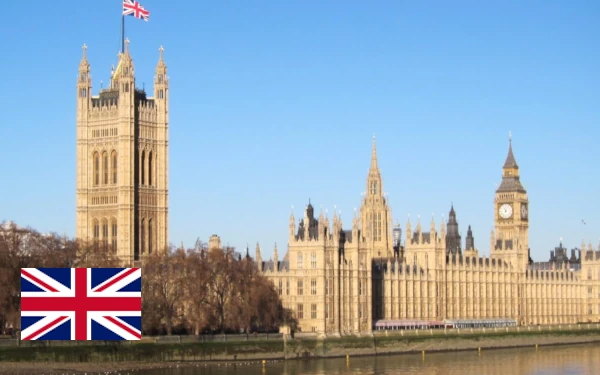
Image Source: Google Earth (taken June 2018)
Senedd Home was mothballed for five long years because of a lack of support. Don’t let it happen again. This site doesn’t receive any public funding or subsidy. If you believe I’m trying something new here or like what’s being done, consider a donation. One-off or monthly; as little or as much as you want.
Click the links below, or full details are available here.
Policing & Criminal Justice
Is this devolved to Wales?

Not Devolved
The powers over this are reserved to the UK Parliament in Schedule 7A of the Government of Wales Act 2006 (Part 1, Section 8: Single legal jurisdiction of England and Wales; Section 9: Tribunals; Part 2, Section B5: Crime, public order and policing; B6: Anti-social behaviour; B11: Rehabilitation of offenders; B12: Criminal records; Head L: Justice, legal profession, coroners, prisons & offender management).
Since the Laws in Wales Acts 1535-1542, Wales and England have had a single legal system, with English law fully applied in Wales. This is called the “single legal jurisdiction”.
Scotland and Northern Ireland have maintained separate legal systems run by their respective parliaments (with a few policy exceptions, such as national security-related issues and drug laws). They are also responsible for policing and prisons.
Although the Senedd can create new criminal penalties in devolved policy areas, it has no control over how its laws are enforced, and there is no Welsh legal jurisdiction. So all laws passed by the Senedd are “England and Wales” laws. This is one of the only examples in the world where two law-making parliaments exist in the same legal territory.
The police remain the only emergency service in Wales not under Welsh Government control. The day-to-day running of the four Welsh police forces has been the responsibility of elected Police & Crime Commissioners since 2012 (the creation of which the Senedd opposed, but was overruled by the UK Parliament).
In 2017, former Lord Chief Justice, Lord Thomas of Cwmgiedd, was appointed to chair a commission (”Thomas Commission”) to consider the issue in detail. The Commission’s report1, published in 2019, recommended that policing, courts, probation, prisons and youth justice should be devolved to Wales, subject to the finances and backroom administration being put in place.
A Welsh Government Cabinet-level sub-committee was set up to consider how the report’s recommendations could be introduced in more detail. However, as of 2026, the only elements of justice set to be devolved are small parts of the youth justice and probation systems.
Plaid Cymru has committed to pursue devolution of policing and criminal justice in its 2026 Senedd manifesto and Programme for Government.
Who has raised this at the Senedd?
What are the party positions on this?
- Supports devolution of policing & criminal justice
- Opposed
- Neutral/No Opinion
Plaid Cymru supports devolution of criminal justice as a means to put Wales on par with Scotland in term of devolved powers.
- Supportive
- Opposes devolution of policing & criminal justice
- Neutral/No Opinion
Reform UK opposes any additional devolved powers for Wales, including criminal justice.
- Supportive
- Opposed
- Mixed Views
There are differences of opinion between Senedd Members (historically support devolution ) and MPs (oppose) on devolution of criminal justice.
- Supportive
- Opposes devolution of policing & criminal justice
- Neutral/No Opinion
The Conservatives oppose further devolved powers for Wales, and support the use of elected Police & Crime Commissioners instead.
- Supports devolution of policing & criminal justice
- Opposed
- Neutral/No Opinion
The Greens support devolution of criminal justice.
- Supports devolution of policing & criminal justice
- Opposed
- Neutral/No Opinion
The Lib Dems support the devolution of criminal justice as a step towards a federal UK.
Who is responsible?
UK Home Office
UK Ministry of Justice
Police & Crime Commissioners (North Wales, Dyfed-Powys, South Wales, Gwent)
What's the UK Government's position on this?
However, the UK Prime Minister, Andy Burnham, has said he is “open to a discussion” on the devolution of policing3.
Before the end of the current parliamentary term, the UK Government is set to undertake major reforms to policing4.
Proposed reforms include mergers between police forces (including the possible creation of an all-Wales police force, or cross-border police force), the establishment of a “National” Police Force for the UK (a merger of several different territorial and UK-wide forces) and the abolition of Police & Crime Commissioners (replaced either with existing elected mayors in England, or boards made up of council leaders elsewhere).
What have the Senedd's Committees said?
Nothing has been discussed yet.
Lorem ipsum dolor sit amet consectetur adipiscing elit.
Quisque faucibus ex sapien vitae pellentesque sem placerat.
In id cursus mi pretium tellus duis convallis.
Tempus leo eu aenean sed diam urna tempor.
Pulvinar vivamus fringilla lacus nec metus bibendum egestas. Iaculis massa nisl malesuada lacinia integer nunc posuere. Ut hendrerit semper vel class aptent taciti sociosqu.
Ad litora torquent per conubia nostra inceptos himenaeos.Lorem ipsum dolor sit amet consectetur adipiscing elit. Quisque faucibus ex sapien vitae pellentesque sem placerat. In id cursus mi pretium tellus duis convallis.
Relevant Votes
Nothing to see yet.
Further Reading
- Thomas Commission (24th October 2019). “Justice in Wales for the People of Wales“
- BBC Wales (9th February 2011). “Police & Crime panels must have approval from AMs“
- BBC Wales (27th August 2026). “PM says he is ‘open’ to devolving policing in Wales“
- UK Government, Home Office. (26th January 2026). “White paper sets out reforms to policing“